7 Surprising Symptoms That Might Mean You Have Dry Eye
Posted by: Pepose Vision Institute in Dry Eyes on October 5, 2026

Dry eye syndrome often produces symptoms that seem to have nothing to do with dryness at all, and many people live with these signs for years without ever connecting them to their tear film. Patients often describe watery eyes, blurry vision, or contact lens discomfort, and are surprised to learn dry eye is the common thread behind all three.
Keep reading to see seven symptoms that might be pointing to dry eye without you realizing it!
1. Waking Up With Stringy Discharge or Crusty Eyes

Your eyes produce far less lubrication while you sleep, and for many people that gap is enough to let the tear film break down overnight. The oil and mucus components of your tears can dry into thin strands or crust along the lash line by the time you wake up. This might point to an underlying tear film problem.
2. Blurry or Fluctuating Vision
Vision that blurs and then clears again with a blink is one of the most common dry eye symptoms patients don’t associate with the condition.
The surface of your eye needs an even, stable layer of tears to focus light properly. When that layer breaks down between blinks, light scatters unevenly across the cornea, and vision briefly loses sharpness until the next blink smooths it back into place.
This fluctuation can be subtle at first, showing up mostly during long stretches of reading or driving. Because the blur comes and goes rather than staying constant, many patients assume they need a new prescription when the real issue lies in the tear film covering the eye.
A comprehensive eye exam can distinguish between a genuine refractive change and tear film instability masquerading as one.
3. Eye Fatigue During Screen Time or Reading
Staring at a screen or a book for long stretches drops your blink rate substantially, sometimes by more than half. Fewer blinks mean less tear replenishment across the eye’s surface, and that combination shows up as heavy, tired eyes well before the end of a workday. Many people chalk this fatigue up to screen brightness or the effort of focusing, without realizing that computer vision syndrome and dry eye frequently occur together and make each other worse.
4. Watery, Teary Eyes That Won’t Quit

It seems counterintuitive that a condition defined by insufficient tears would cause excessive watering, but reflex tearing is one of the eye’s most common responses to irritation. When the tear film is too thin or unstable to keep the surface comfortable, the eye triggers a flood of watery tears to compensate.
Those reflex tears lack the oil and mucus components needed for lasting lubrication, so the cycle of irritation followed by overflow repeats throughout the day. Patients are often surprised to learn that constant watering can be a dry eye symptom rather than a sign of too much moisture.
5. Sensitivity to Light, Glare, or Halos
An irregular tear film scatters light as it enters the eye, which can make headlights, overhead lighting, or even ordinary daylight feel unusually harsh. Some patients notice halos or starburst patterns around bright lights at night, a symptom that often gets mistaken for early cataracts or a need for a stronger glasses prescription. The smoother and more stable your tear film, the more evenly light passes through to the retina, and correcting the tear film alone can noticeably reduce this glare.
6. Redness That Doesn’t Match Your Allergy Symptoms
Chronic eye redness is often written off as seasonal allergies, particularly during spring and fall. Dry eye, though, triggers its own inflammatory response on the surface of the eye, producing redness that lingers regardless of pollen counts or antihistamine use. If over-the-counter allergy drops aren’t calming the redness after a few days, the irritation may be coming from the tear film itself rather than from an allergen in the air.
7. Contact Lenses That Feel Fine in the Morning but Miserable by Evening
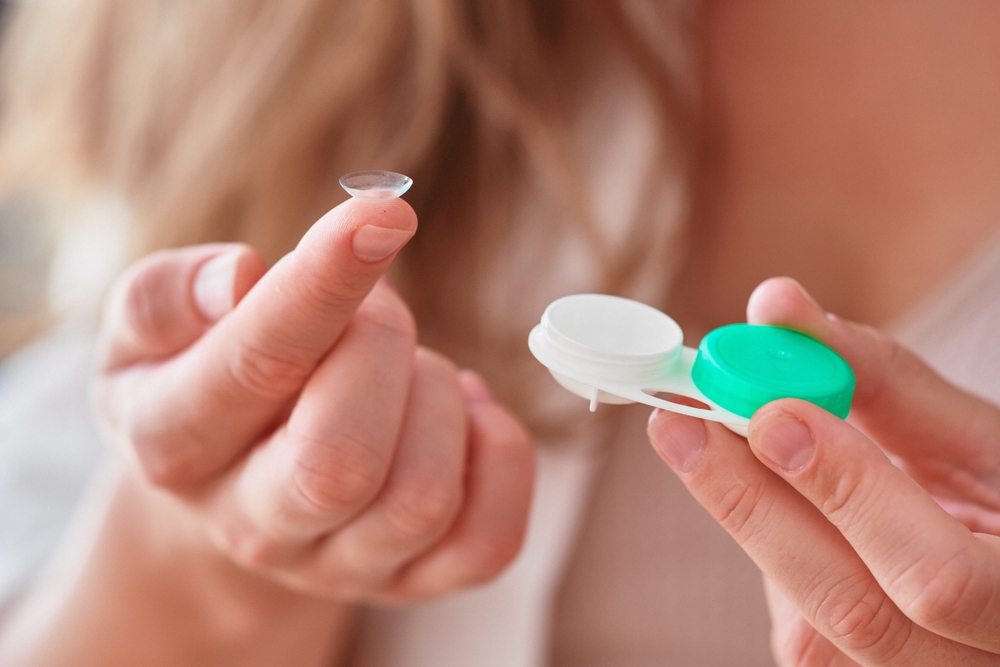
Contact lenses rely on a healthy tear layer to stay comfortable and in place on the eye’s surface. As that layer thins over the course of the day, lenses can start to feel dry, tight, or gritty by late afternoon even if they felt completely comfortable at breakfast. This end-of-day discomfort is one of the most frequent reasons patients give up on contact lenses altogether, often without realizing that treating the underlying dry eye could extend how long lenses stay comfortable.
Corneal shape and tear quality both influence how well a lens sits on the eye’s surface, which is why this discomfort tends to build gradually across the day rather than appearing all at once. Switching lens brands or solutions sometimes helps temporarily, but a pattern that repeats day after day usually points back to the tear film itself.
When to See an Eye Doctor
Dry eye symptoms overlap with allergies, aging vision changes, and screen fatigue, so an eye doctor measures your tear production, evaluates the oil glands along your eyelids, and checks the surface of your cornea to pinpoint exactly what’s driving the discomfort.
Pepose Vision Institute is a leading provider of advanced dry eye diagnosis and treatment in the St. Louis area, using diagnostic testing that measures the oil layer of your tears and how completely you blink to build a treatment plan around your specific cause. From there, dry eye treatment can target the actual source of your symptoms instead of offering a generic fix that only masks them temporarily.
Wondering if dry eye treatment could restore your comfort? Schedule an appointment at Pepose Vision Institute in St. Louis, MO.