How to Find an Ophthalmologist in St. Louis
Posted by: Pepose Vision Institute in Eye Care on September 4, 2026

The decision of choosing an eye surgeon affects one of your most valued senses, and the right choice should depend on the surgeon’s training, the technology, and how well the practice communicates with you before and after treatment.
St. Louis has no shortage of eye care options, so knowing what actually separates one ophthalmologist from another makes the search far less overwhelming.
Keep reading to learn the questions worth asking, the credentials worth checking, and the practical details that tend to matter most once you become a patient.
Start With the Right Type of Eye Doctor
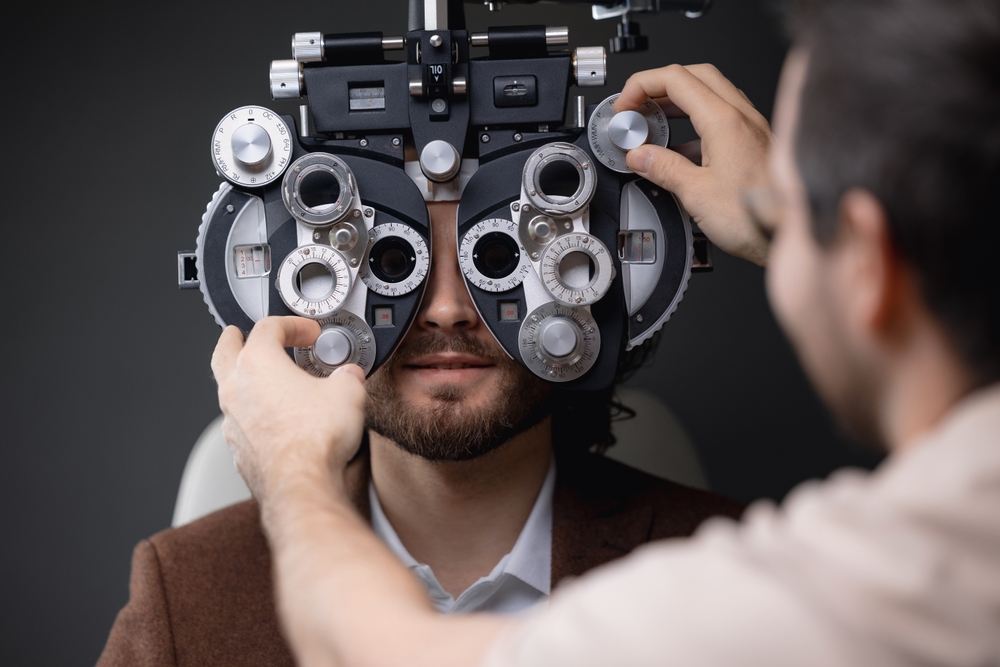
Not every eye care provider offers the same services.
An optometrist handles routine exams, prescriptions, and many aspects of ongoing eye health. An ophthalmologist is a medical doctor who completed medical school, a residency in eye care, and often additional fellowship training, which qualifies them to perform surgery and manage complex disease.
If you are weighing the two, the difference between an optometrist and an ophthalmologist comes down to scope: surgical procedures, advanced diagnostics, and disease management fall under the ophthalmologist’s expertise. Cataracts, glaucoma, corneal conditions, and vision correction surgery all belong in the hands of a surgeon who treats them regularly.
Check Training, Board Certification, and Experience
Credentials tell you whether a surgeon has the foundation to handle your care safely.
Look for board certification, medical school and residency details, and any fellowship training in a subspecialty that matches your needs. A surgeon who focuses heavily on cornea, retina, or refractive surgery brings depth that a generalist may not.
You also should consider their volume. A surgeon who has performed a procedure thousands of times has encountered a wider range of anatomy and complications than one who performs it occasionally.
The experienced eye doctors at Pepose Vision Institute include surgeons ranked among America’s Top Doctors, and the practice has completed more than 40,000 cataract surgeries and over 30,000 LASIK procedures across more than two decades.
Match the Practice to Your Specific Need
The best ophthalmologist for a friend may not be the best one for you. Your ideal match depends on what you actually need treated.
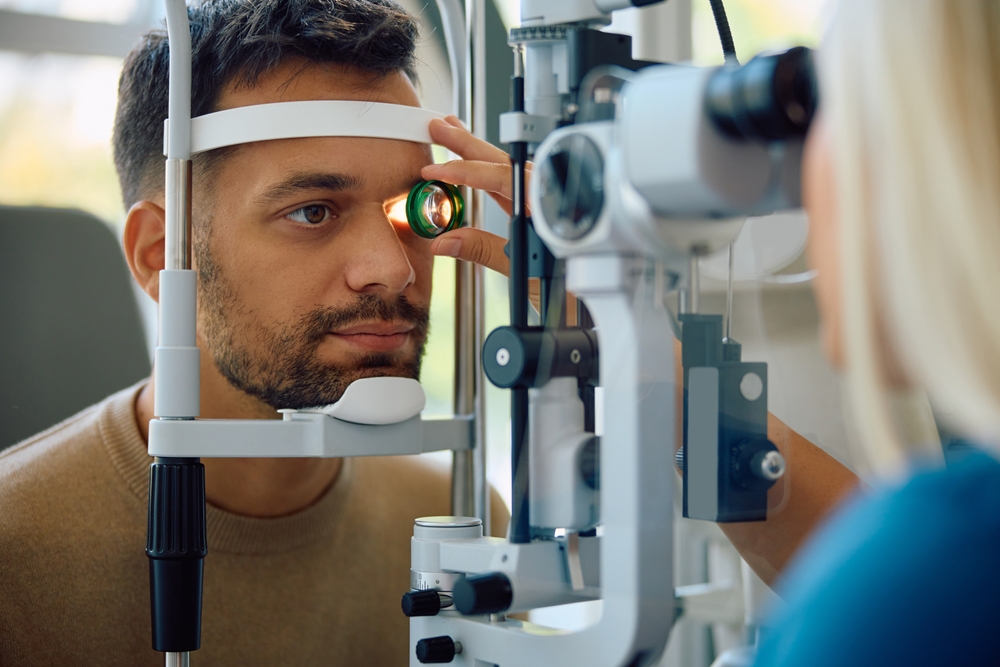
If you are researching vision correction, confirm the practice performs the specific procedure you are considering and uses current technology.
A surgeon offering LASIK in St. Louis should evaluate your corneal thickness, prescription stability, and eye health before ever recommending the procedure. For age-related lens changes, ask whether the practice offers a full range of intraocular lens options during cataract surgery, since premium lenses can reduce or eliminate dependence on glasses for many patients.
Patients with diabetes, glaucoma, or a family history of eye disease benefit from a practice that provides comprehensive care under one roof. Being able to move from a diagnosis to treatment without a referral across town saves time and keeps your records in one place.
Look at the Technology Behind the Exam
Diagnostic equipment shapes the accuracy of your treatment plan. Precise measurements before cataract or refractive surgery directly influence how well you see afterward.
Pepose Vision Institute uses the ARGOS optical biometer for lens calculations, the iFS laser system for bladeless LASIK flaps, and Orbscan corneal topography to map the surface of the eye in detail. Technology like this allows a surgeon to customize a procedure to your individual anatomy rather than applying a one-size approach. When you tour a practice or read about its services, note whether the equipment reflects current standards or lags a generation behind.
Ask How the Practice Handles Communication and Follow-Up
Surgical skill is only part of a good outcome. How a practice treats you before and after a procedure often determines how confident and comfortable you feel throughout.
During a consultation, pay attention to whether the team explains your options clearly and answers questions without rushing. A practice built on a patient-first philosophy will walk you through the reasoning behind each recommendation.
Follow-up care deserves the same scrutiny. Ask how post-operative visits are scheduled, who you contact if a concern comes up after hours, and how long the practice stays involved in your recovery.

Consider Location and Access
Eye surgery usually involves several appointments: a consultation, the procedure, and multiple follow-up visits. A practice that is difficult to reach can turn routine care into a recurring inconvenience. Pepose Vision Institute serves patients from a Chesterfield office and a St. Louis office, which gives people across the metro area a reasonable drive for both surgery and follow-up. Some patients travel from Illinois, Arkansas, and beyond for specialized care, but for routine visits, proximity keeps the process manageable.
Schedule a Consultation Before You Decide
A consultation lets you see the practice in person, meet the team, and get answers specific to your eyes.
Come prepared. Bring a list of your current medications, any history of eye conditions, and the questions that matter most to you. During the visit, the specialists at Pepose Vision Institute use advanced diagnostics to assess your vision and explain which treatments fit your situation. This is also your chance to gauge whether the practice communicates in a way that puts you at ease.
If your needs are more routine, a comprehensive eye exam is a natural starting point. It establishes a baseline for your eye health and often reveals whether a specialist visit is warranted at all.
Finding the right ophthalmologist takes a little research, but the payoff is care you can trust for years. Focus on training, technology, communication, and access, and the shortlist tends to narrow quickly.
Ready to meet a St. Louis eye care team that treats every patient like family? Schedule an appointment at Pepose Vision Institute in St. Louis, MO.